
Protection of Research and Development Information
The greatest asset of research and development teams is their knowledge and experience. These deserve the greatest protection.
Research Projects
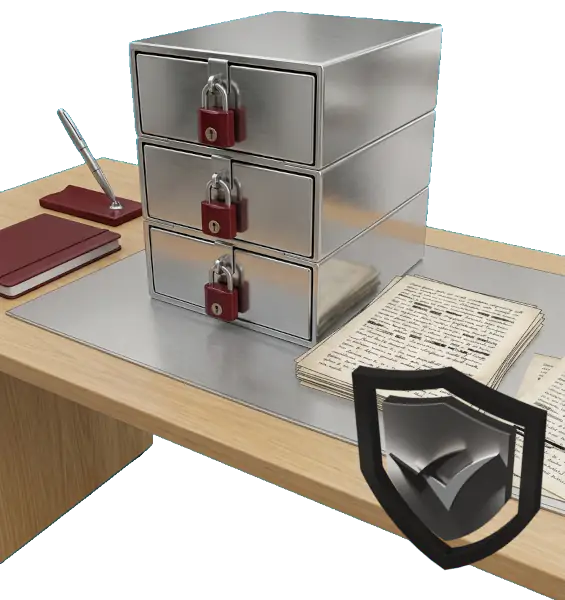
Risk: Information leaks often go unnoticed until years of research have lost their value
Valuable research information is constantly targeted by competitors, foreign organisations and other parties seeking competitive advantage. Research institutes, universities and corporate R&D teams are all potential targets. A single moment of inattention can undermine years of work.
Most information leaks originate through people who legitimately work close to the project – colleagues, contractors or other staff in the same organisation. In many cases they are not acting intentionally; their accounts or access rights are simply exploited.
How to protect research project data
- Keep research results and project knowledge in a secure repository designed to protect information even from unauthorised people within the organisation.
- The greatest value is usually not an individual document but the complete picture – the project structure, experiment records, test results and conclusions. Protect the entire knowledge base, not just individual files.
- Every team member should have access only to the information they need. This is especially important for external collaborators, interns and other people outside the core research team.
- Information must remain easy to organise and share securely. Otherwise people will create personal indexes, copies and notes outside the protected environment.
Product Development
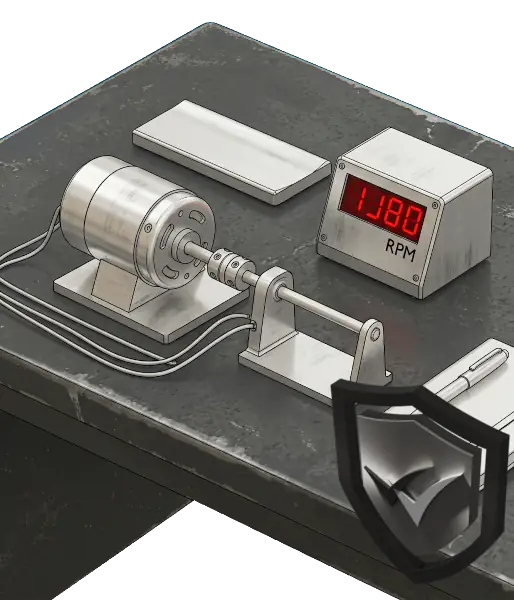
Risk: Information about a new product can help competitors gain an advantage or submit a better offer
Project information is valuable throughout the entire development process – from the initial concept to prototype testing and final validation. Every stage contains knowledge that can be exploited.
Information leaks often involve suppliers, external partners or everyday project communication. Effective protection must therefore cover the entire development process, not only the final documentation.
How to protect product development
- Protect project information from the initial concept through design documentation to test reports.
- Protection must be integrated into the project workspace where people actually work. If security is inconvenient, people will simply work elsewhere.
- Standard corporate file shares are not designed to protect valuable know-how. They are accessible to many users, centrally administered and offer only limited control when collaborating securely with external partners.
Conventional Technologies Cannot Protect Your Most Valuable Information
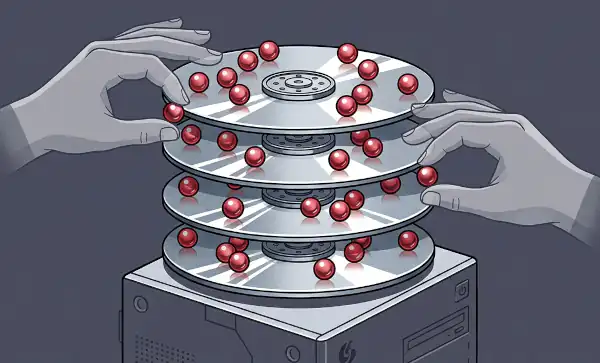
Security should never depend solely on centrally managed access permissions.
Collaboration platforms are not designed to protect strategic know-how
Collaboration platforms
Platforms such as SharePoint, Microsoft Teams and Google Workspace are designed primarily to make collaboration easy. Protecting highly confidential research and development information is not their primary purpose. A single configuration mistake can expose sensitive information. Security also depends on system administrators, who should not need access to the confidential information they are expected to protect and therefore cannot fully assess the sensitivity of the data they manage.
Encrypted storage
Encrypted drives primarily protect information if a device is lost or stolen. They do not protect confidential information from misuse within an organisation, where authorised users already have access to the files.
Risks of security based only on access permissions
- Access permissions are usually managed by IT administrators. However, they cannot reliably determine who should access information whose content they are not supposed to know.
- Permissions can be changed without the knowledge of the project team responsible for the information.
- Research and development teams typically have no independent way to verify who currently has access to their sensitive information.
- Granting external access to collaboration spaces is easy, but conventional tools often cannot provide the fine-grained separation needed to share only the specific information an external partner requires.
The fundamental weakness of conventional collaboration platforms is that decisions about information security are made by people who cannot properly assess the sensitivity of the information they administer.
Protecting Internal Communication and Research Knowledge

The final result is not the most valuable asset. The greatest value lies in the information that reveals the path of the research.
Discussions, comments and messages contain a significant part of a project's know-how
Project discussions and internal communication are often overlooked. When a team relies on conventional email, maintaining consistent security for sensitive information becomes extremely difficult.
Internal communication should be preserved as part of the project knowledge base. It should not be scattered across private messaging services such as WhatsApp or similar applications.
A secure communication system should provide
- Discussions stored in a secure environment and directly linked to the records, documents and projects they relate to.
- Protection for detailed technical discussions, which are often among the most valuable sources of project knowledge.
- The ability to grant new team members access to previous discussions without compromising security.
- Tools that are easy and convenient to use. If security makes everyday work difficult, people will simply bypass it.
Why protecting work in progress matters
The finished product, scientific publication or patent will eventually become public. The real competitive value lies in the knowledge created during development – experiments, test results, unsuccessful approaches, rejected concepts, technical challenges and the methods used to overcome them. This is the knowledge that can save a competitor years of development.
The entire project requires protection, not just the final documents. At the same time, it must be possible to define precisely who can access each part of the project. External collaborators, contractors and students should receive access only to the information they genuinely need.
Research succeeds because of details. That is why protecting the details matters most.
Protecting Personal Research Notes

Every team member should have a secure place for personal notes
Notes stored in notebooks, personal files or unprotected documents can become an easy source of information for anyone attempting to monitor a project over a long period.
Banning personal notes is not a realistic solution.
What a note-taking system for research and development teams should provide
- Researchers need genuinely private working space, knowing that their personal notes remain confidential unless they decide to share them.
- Shared notes should support precise access control. Authors and project teams should be able to grant or withdraw access themselves, without depending on IT administrators or approval workflows.
- Teams should establish clear rules for handling research notes, including procedures when a team member leaves the project.
A well-protected project should never become an obstacle to collaboration. It should ensure that every team member has access only to the information they need, that valuable knowledge remains together, and that sensitive information never leaves the project's secure environment. Security should be a natural part of research and development, not a barrier to it.
The people who create and own the project's knowledge should remain in control of its protection and access.